Scene: The Perfect Sunday
Sunday mornings in the Union were supposed to feel the same as every other day—gray, scheduled, efficient. But the kids knew better. Sunday was the one day the rules cracked open just wide enough for light to sneak through.
The wind off the frozen river bit like it always did, slicing through wool coats and turning breath into ghosts, but nobody cared.
By the time Gustav reached the old arcade on the edge of the industrial district, a small crowd of kids had already gathered outside the heavy steel door, stamping their feet and blowing on their hands. Jeff stood there like a rebel king, key in hand, his messy dark hair dusted with snow and that rare, dangerous grin on his face.
“Sunday protocol engaged,” he announced, voice low and conspiratorial. He unlocked the door with a dramatic flourish.
Warmth and colored light spilled out like forbidden treasure.
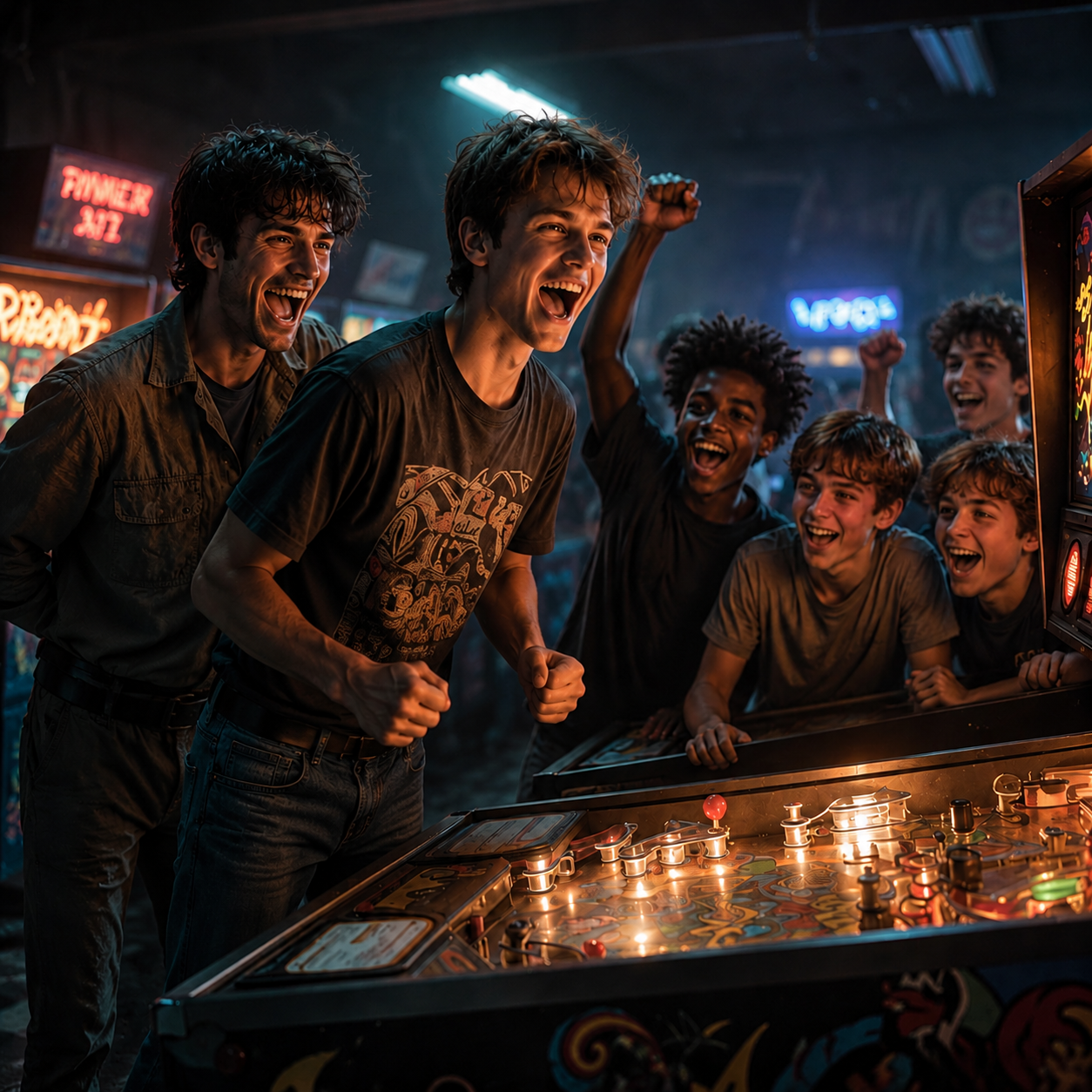
Inside, the air smelled of ozone, old plastic, and victory. Jeff had been secretly repairing machines for months—smuggled parts, late-night soldering sessions, pure stubborn love. Today the place was alive. The pinball machine in the center flashed like a captured star. Pac-Man ghosts chased their dots across a resurrected screen. A restored Street Fighter cabinet hummed with electronic tension. Even the old claw machine—once nothing but a dusty tomb—now glowed with soft neon hope.
Gustav, six feet of blond-haired teenage chaos, let out a whoop and sprinted straight for the pinball. Vincent and Demetrius were already there, elbows flying, shouting strategy like it was life or death. Gustav’s silver ball ricocheted wildly. Every time it hit a bumper, the machine exploded with lights and triumphant chiptunes that felt like rebellion set to music.
For three glorious hours, the Union didn’t exist.
No drones. No committees. No lectures about multi-planetary destiny. Just the clatter of flippers, the smell of hot electronics, and the sound of kids who were supposed to be preparing for the Space Elevator forgetting, for one perfect Sunday.
Outside, the wind howled and the temperature dropped. Inside, the old arcade glowed like a small, defiant sun.
And for one day a week, in the middle of the icy Union city, the kids remembered what freedom tasted like.
It tasted like Sunday.
Scene: Anna’s Roses
The workshop was quiet except for the soft scrape of steel on wood.
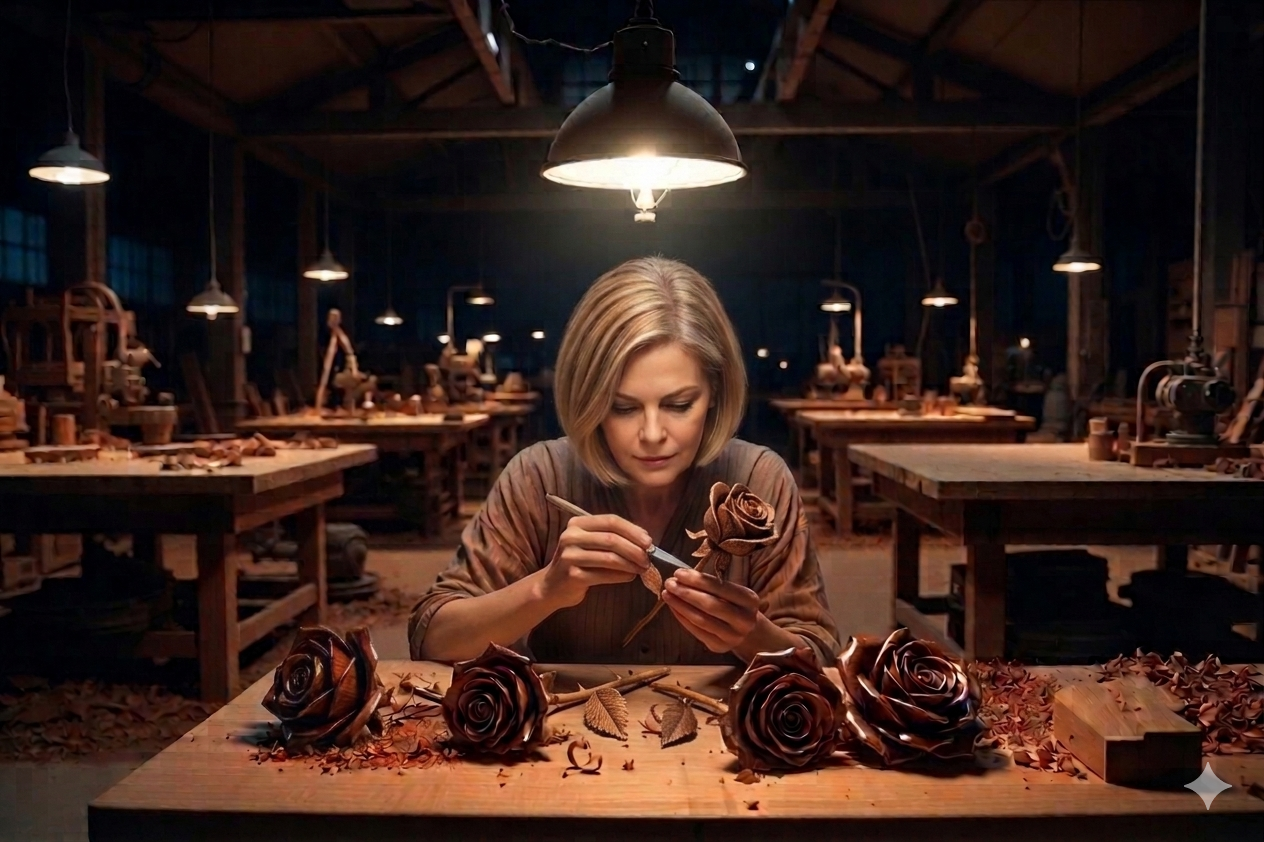
Anna’s fingers moved with practiced reverence, guiding the chisel along the curve of a petal. The cherry wood was warm from her hands, almost alive. She loved this part — the way the grain rose up to meet her blade, revealing secrets only she could see. Each stroke released a faint, sweet scent of fresh-cut timber that filled the empty warehouse like incense.
It was well past midnight. The other tables stood dark and silent, tools put away, but Anna’s single hanging lamp carved a small circle of gold around her workbench. Four roses already rested beside her, each one unique. She was carving the fifth now, the one she would give to Karen’s daughter on her wedding day.
She paused, running her thumb across the half-finished bloom. The wood was smooth where she had polished it, still rough where the next layer waited. She closed her eyes and breathed in the smell again — earth and forest and time itself. For a moment the Union, the birth quotas, the cold gray future all fell away.
She’ll smile, Anna thought. When she opens the box on her wedding morning and sees these roses, each one different, each one carved with love she can hold in her hands… she’ll smile like the world is still beautiful.
A small, fierce joy bloomed in Anna’s chest, warmer than the lamp above her. Her chisel moved again, gentler now, almost tender. Shavings curled away like tiny golden ribbons, falling silently to the floor.
She wasn’t just carving wood.
She was carving hope. One deliberate, loving stroke at a time.
Scene: Wednesday Night Town Hall
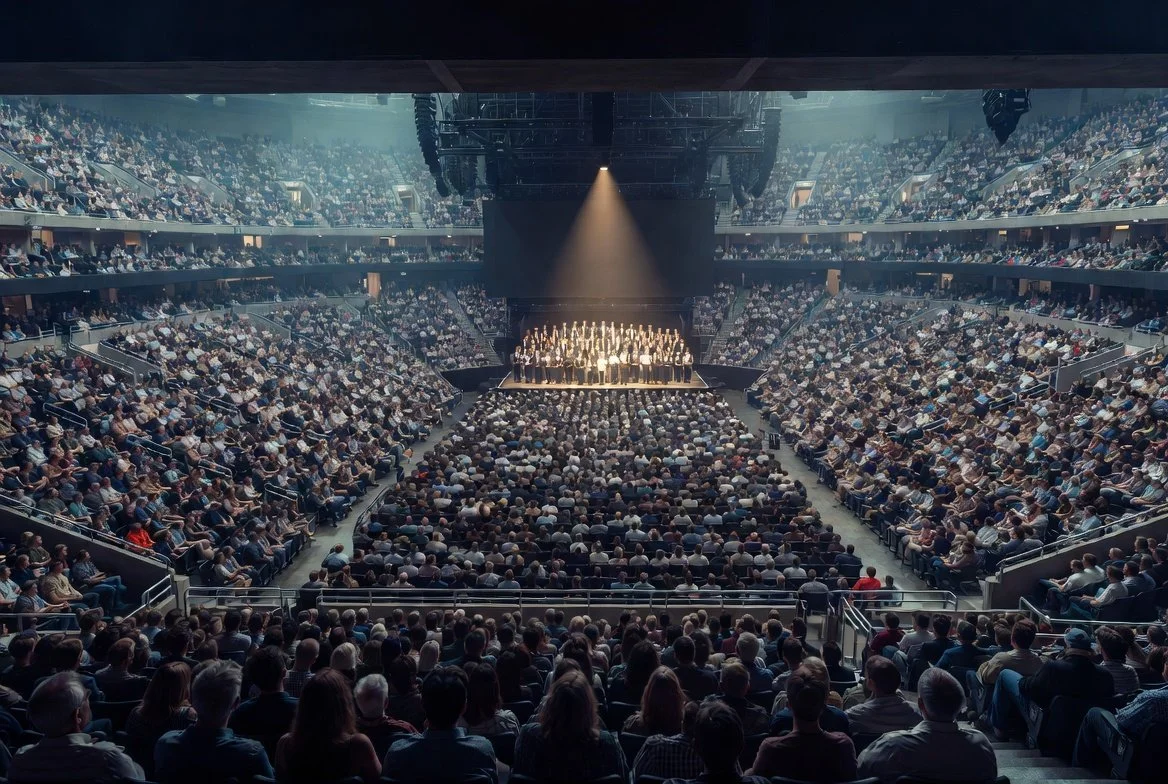
Fern slouched deeper into the hard plastic seat high up in the cheap upper deck, the one that always smelled faintly of old sweat and disinfectant. From this height, the stage looked like a postage stamp. She could just make out the fifty kids in the children’s choir standing in neat rows, their mouths opening and closing in perfect, lifeless unison.
She had come in hopeful. Maybe tonight, she’d thought, clutching the small block of pine and her pocket knife. Maybe someone will say something real. Maybe there’ll be a comedian. Or at least a joke.
The choir finished. Polite applause rippled through the stadium like a dying wave. Then came the modern dance—twenty kids in gray leotards moving in slow, confusing patterns that made Fern’s brain itch. She tried to find the humor in it, but even her internal comedian was yawning.
She pulled out her knife and started whittling. The soft shhhk-shhhk of blade on wood was the only thing keeping her eyes open. Tiny curls of pine fell into her lap like pale confetti. She was trying to shape a tiny horse, something small enough to hide in her coat pocket. Something that felt like hers.
Next came the slideshow. Charity Glads droned on about local artists while grainy photos of approved Union sculptures flashed on the enormous screen. Fern counted the budget reports that followed. One… two… three… By the fourth one, her shoulders had slumped so far she was practically folded in half.
The boredom had weight. It pressed down on her chest like wet snow, making every breath feel heavier. She kept carving anyway, desperate. The blade slipped once and nicked her thumb. She hissed quietly, sucking on the tiny cut.
This is supposed to be how we build community, she thought bitterly. This is what they give us instead of the old internet or music or anything that actually felt alive.
Her eyelids grew impossibly heavy. The spotlight on the stage blurred into a soft golden smear. The sound of some council member reading numbers about waste management turned into a low, meaningless hum.
Fern’s head tipped slowly sideways until it rested against Gustav’s shoulder. He didn’t move—he was already asleep too.
Somewhere far below, the endless reports continued.
And high in the cheap seats, Fern dreamed of a stage where people actually laughed.